
Ingham Previous Residents by Era
The backward trail for an Ingham address changes with the period being studied. Recent land papers may identify a recorded owner, while an older street section may identify a household at the number. Maps and assessment materials help bridge those layers. This era table makes the handoff visible, especially when the easiest online result ends before the property story does. Treat each row as a source for a specific kind of claim, not as proof that every person named there lived at the address.
| Source | Years It Covers | Where Held | What It Shows |
|---|---|---|---|
| Register of Deeds free index | 1956–present, except the latest 7 days | Ingham Direct Search | Indexed parties, instruments, and identifiers; 1956–1981 discrepancy warning |
| Tapestry deed images | About 1960–present | Tapestry, Laredo, or the Register | Instrument image and legal description, subject to redaction |
| Deed books and vault | Land-record history from 1835; office search before 1960 | Mason courthouse vault | Earlier grantor-grantee books and copies by appointment |
| Polk and city directories | 1867–present in print; early PDFs for selected years | CADL, MSU, and CADL branch databases | Address-era occupants, spouse, occupation, and household-status notation |
| Federal and Michigan census | Federal public through 1950; Michigan records for 1884 and 1894 | Archives, library databases, and Michiganology | Household composition and address or enumeration context |
| Sanborn maps and CADL house files | Sanborn 1867–1970; Stebbins mainly 1920s–1970s | MSU, Library of Congress, and CADL Local History | Building change, address-organized real-estate material, photos, and clippings |
Start with the parcel if the date is unknown. Start with a directory volume when a household name and approximate year are already known. Use the vault rather than forcing a digital result to cover an earlier land record.
Freeze an Ingham Parcel Worksheet
Before following past residents, make a worksheet from the modern address. Copy the exact street spelling, suffix, city or postal city, parcel number, legal description, current owner, mailing address, situs address, subdivision, lot, block, and any alternate address that BS&A shows. Save the date of the assessment display as well. A later split, readdressing, or change of number is easier to recognize when the starting property has been described completely.
The Ingham County Equalization Tax Mapping Viewer adds the map check to that worksheet.
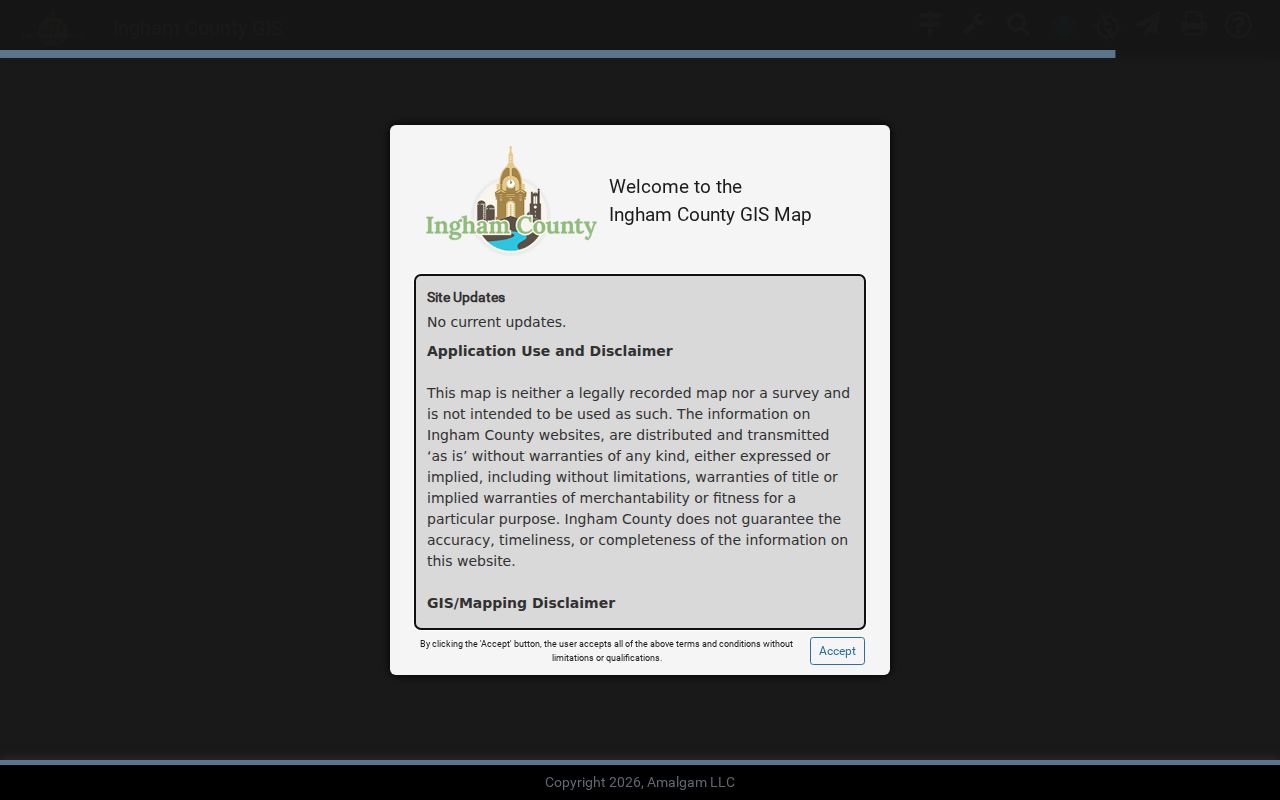
Mark the parcel in the viewer and retain its polygon context. A modern street number without the parcel and legal description is a weak key for older Ingham research.
BS&A searches by address, owner name, and parcel number. Its owner or taxpayer mailing field can point to a trust, estate, business, or other contact, so it must not be relabeled as a residence.
Trace Ingham Previous Residents Through Deeds
The deed chain supplies the ownership side of previous-resident research. Begin with the current owner as grantee and the parcel's legal description. Find the deed that appears to vest title, record its grantor, date, instrument type, document number or book and page, and legal language. Then search the seller as a grantee to find that seller's own acquisition. Repeat the sequence while retaining middle initials, spouses, trusts, estates, and business suffixes. They can be continuity links, not stray results.
- Run the current address in Ingham BS&A Online and copy the parcel, owner, and legal description.
- Search the current owner as grantee in Ingham Direct Search, using the legal description to test the match.
- Identify the transfer that vested title and record the grantor, recording date, instrument, and document identifier.
- Search that grantor as a prior grantee, then repeat the same comparison of parties and legal description.
- When the chain reaches an early or uncertain online result, take the identifiers to the Mason vault rather than relying on the street number alone.
- Grantor and grantee
- The grantor transfers an interest; the grantee receives it. Each role is used to walk from one recorded transfer to the earlier one.
- Chain of title
- A sequence of instruments connecting one recorded interest to an earlier interest in the same property.
- Legal description
- The lot, block, subdivision, section, township, range, or metes-and-bounds wording that identifies land more durably than a street label.
Ingham Previous Residents and the Vault
An online land index is not a continuous record trail. Ingham's free index begins in 1956 and excludes the most recent seven days. The county has warned that indexed data from 1956 through 1981 has conversion discrepancies, while data from 1982 forward has been described as accurate. Tapestry provides paid image access from about 1960. Those dates create an important seam for past residents: an image or missing index entry can require a different access channel.
For pre-1960 searching, or when the 1956–1981 seam matters, arrange a Mason vault appointment at 517-676-7216. The vault is open Monday through Friday, 8:30 a.m. to 4 p.m. The Register can also process a copy request when supplied with a name or property description, book and page, or document number. Copies are $1 per page.
Note: An absent online hit near the conversion seam is a reason to check the vault, not a reason to conclude that no transfer occurred.
Ingham Previous Residents: Legal Descriptions
Read the legal description before searching an old street. A plat can join a lot and block to a recorded map, while rural land may use section, township, range, and metes-and-bounds calls. A later re-recording or plat can be the bridge between a modern street address and an older description. Keep that bridge beside the parcel worksheet, because a name-only or address-only search can miss the same property after renumbering.
Lansing's first numbering system, visible in Mudge's 1878 directory, was used about 1867 to 1883. Early directories can omit the North, South, East, and West qualifiers now attached to later street names. Test the old number, street spelling, cross streets, block, plat, and Sanborn index. For an East Lansing result, also check whether the geography lies in Clinton County. A postal city and governmental township should be kept as separate fields.
Ingham Previous Residents in Polk Streets
Deeds identify recorded interests, not every household. To find who lived at a number, move to the Polk street section and its cross-reference companion. CADL says the annual directories provide household-status information by last name and, from 1906 forward, by street address. Search the address section for a targeted year, then check the alphabetical section for the same name. Record the abbreviations as printed and compare the years immediately before and after a change.
The full shelf, digital access, and publisher runs are cataloged on the Ingham City Directories page. For local-history connections outside a single directory, the Greater Lansing local-resources network points researchers toward CADL, MSU, Michiganology, yearbooks, and newspapers.
The network is useful for locating a companion collection after a directory supplies a surname, old address, or approximate move date.
Pair Ingham Directories With Census Years
A directory and census page record a household at different moments, so pair them rather than treating them as duplicates. Federal schedules are released on a 72-year rule and the complete public federal census currently ends with 1950. For example, compare a 1906 street entry with the 1900 and 1910 census, a 1938 entry with 1930 and 1940, or a 1945 entry with 1940 and 1950. Differences can reflect a move, a publication date, or a household change.
- Transcribe the street spelling, number, people, and abbreviations from one directory year.
- Check the same address in the next and previous available street section.
- Use the nearest public census to test household composition, age, birthplace, and enumeration context.
- When the address vanishes, test an old number, a renamed street, a newly annexed area, and the neighboring county.
For state and local archival holdings, start with Michiganology and the Archives of Michigan finding aids.
Michiganology is a finding route for older record groups, including the Ingham materials that fill gaps between local directory volumes.
Ingham Past Residents in House Files
CADL's house-history material gives a different view of a previous-residents trail. Its guide recommends checking a street in Local History Online, the Stebbins Real Estate Collection, directories, assessor and Register records, newspapers, maps, and photos. Stebbins was saved from possible disposal in 1965 and is now an address-organized collection of nearly 400 boxes across Greater Lansing and Ingham County. The files are mainly from the 1920s through the 1970s and can include standardized cards, exterior photographs, negatives, listing information, and clippings.
The companion Belon Real Estate Collection covers 1952 to 1970. Neither collection should be read as a complete occupancy list, but each can explain the building and marketing history beside a directory or deed result. A 2024–2025 Library of Michigan grant supports digitizing the first portion of the Stebbins standard card files, and material that is not yet online can be scanned on demand by staff.
The CADL house-history guide is the starting point for those address-organized files.
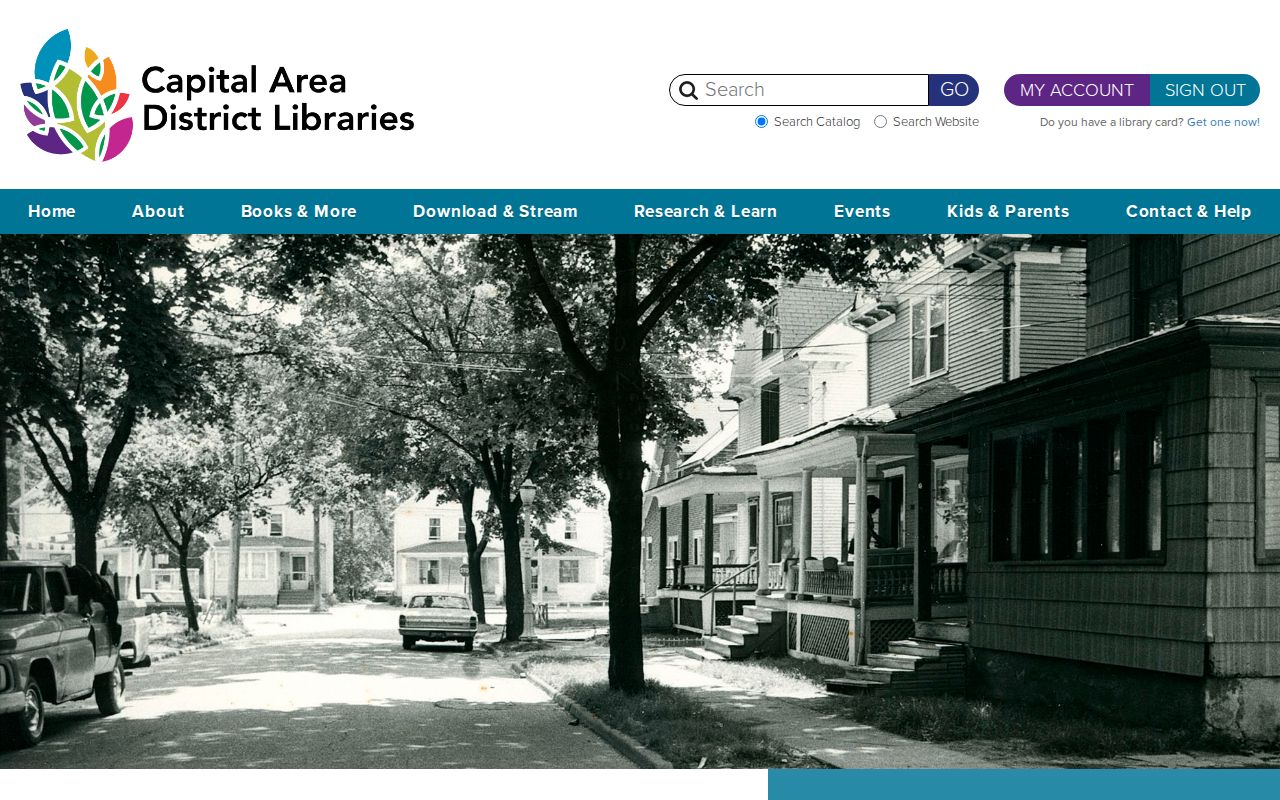
The guide connects the house file to maps, directories, deeds, and photographs, which helps distinguish the building's history from the history of one resident.
MSU identifies Lansing Sanborn maps from 1867 to 1970, and the Library of Congress provides free scans for many early editions. A Sanborn can date a footprint, material, use, stories, and nearby lot pattern. Pair it with a directory and deed because it does not name every resident.
Closing Ingham Previous Resident Trails
When a past household leaves the directory, an obituary, cemetery record, or probate file may provide the next source. A death notice can connect a directory name with a spouse, children, former address, funeral home, or cemetery. Probate can identify an estate, executor, heirs, and a later deed. Ingham's archival holdings include estate files from about 1843 to 1898, while local newspapers and obituary routes provide later leads. An address shown in an estate file belongs to that record's time, not a statement about current whereabouts.
Personal and lawful research. Use Ingham house-history records for family history, estate questions, or property curiosity. Do not use an old address trail to target, track, intimidate, or harass a living person; Michigan's MCL 750.411h prohibits stalking conduct based on repeated harassment.