
Ingham City Directory Shelves
Ingham city directories are centered on Lansing, but many volumes reach beyond the city line. The Capital Area District Libraries catalog identifies title changes under R.L. Polk, including Polk's Lansing city directory and Polk's Lansing (Ingham County, Mich.) city directory. Its annual records can include East Lansing, Haslett, Holt, Okemos, and parts of nearby townships. That regional reach matters when a household used a Lansing mailing address while living in a different local unit. The collection is a run with gaps and combined years, not one uniform publication.
| Collection | Years | Where Held | Access |
|---|---|---|---|
| C.P. Smith Lansing business directory | 1867-68 | CADL and digitized historical copies | Scan, catalog, or Local History Center |
| Early Lansing city directories | 1867, 1873, 1878, 1883, 1894, 1904 | CADL linked PDFs | Free digital reading |
| R.L. Polk Lansing and Ingham volumes | 1867-present print run; Local History copies 1945 through at least 1989 | CADL Local History; MSU Special Collections and stacks | Reference or library use; branch full text through 1960 |
| Polk cross-reference and criss-cross | Local twentieth-century runs | CADL Local History | Address and street section at the library |
| Directory Collection and telephone directory | 1909-present collection; August 1933 telephone directory identified | CADL Local History | Catalog and onsite reference |
The printed CADL run is described as 1867 to the present, but a title, coverage area, or issue date can change from one volume to the next. The catalog lists gaps and combined editions such as 1949-50, 1951-52, and 1974-75. Record the exact title page before deciding that a missing name means a person left Ingham County.
Ingham City Directory Beginnings
The first local volume was not a full household roll. C.P. Smith's 1867-68 Lansing business directory focused on advertisers, businesses, and addresses. Mudge's 1878 directory provides a bridge to later volumes and survives through CADL and the Historical Society of Greater Lansing. The better-known Polk series follows that early material. Keeping the publication purpose in mind prevents a false conclusion when an early business book omits a family that was not running an advertised concern.
The MSU Libraries Lansing history guide points researchers to Polk volumes, historical newspapers, and map resources for the same place and period.
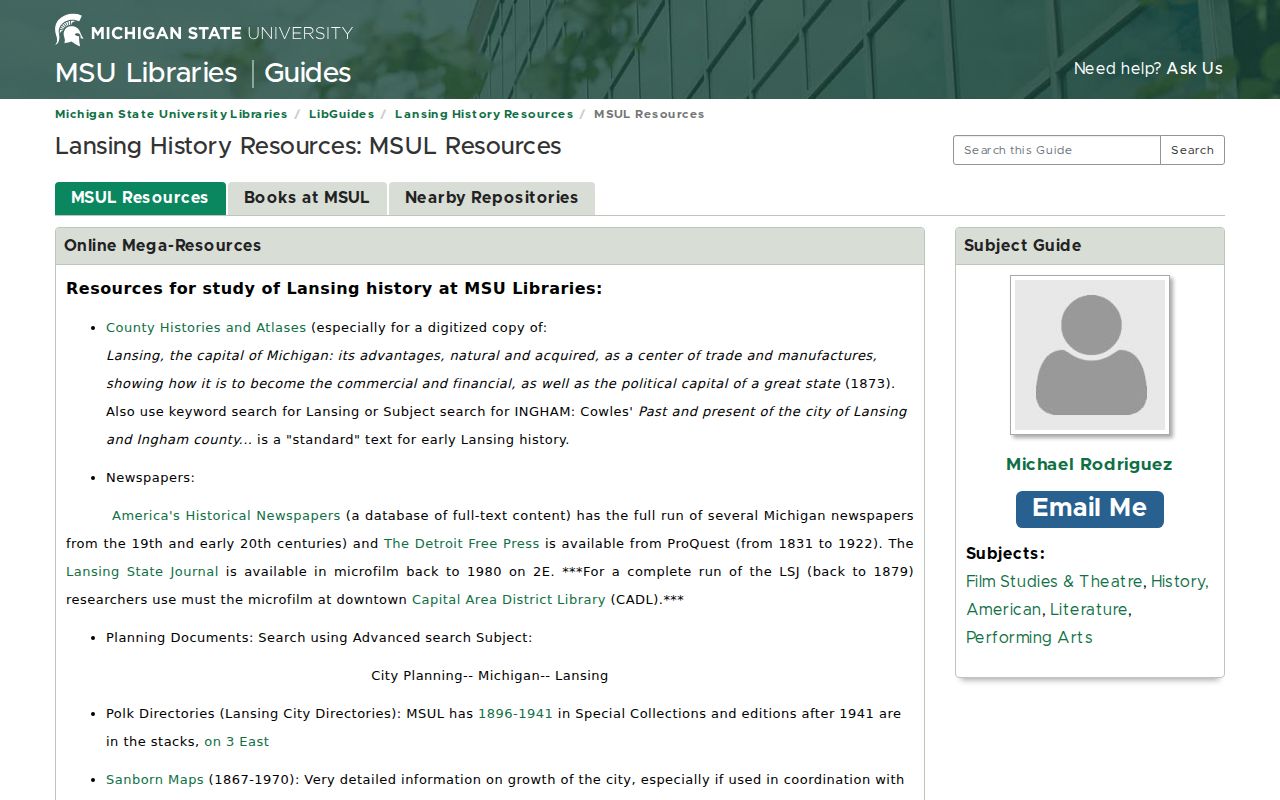
MSU Special Collections holds Polk directories for 1896-1941, with post-1941 editions in the third-floor stacks. That second shelf can fill a CADL gap or provide another copy for close reading.
- 1867-68: C.P. Smith publishes the Lansing business directory.
- 1878: Mudge's Lansing directory documents the early city-numbering era.
- 1906 onward: yearly publications add street-address access alongside surname entries.
- 1945 through at least 1989: CADL's Local History Center catalog lists reference copies, with gaps and combined years.
Polk Ingham City Directory Runs
The Polk label is useful, but it is not a promise that every volume covers the same residents. A volume may call itself Lansing, Lansing and Ingham County, or use another title variant. The CADL catalog is the right starting point for checking a particular year, while the volume itself tells which places and street sections were included. CADL also makes six early volumes available as linked PDFs: 1867, 1873, 1878, 1883, 1894, and 1904. These are especially useful when a surname needs an exact transcription.
The CADL local-history collections page shows the setting around the Directory Collection, including name cards, newspapers, schools, and other local material.
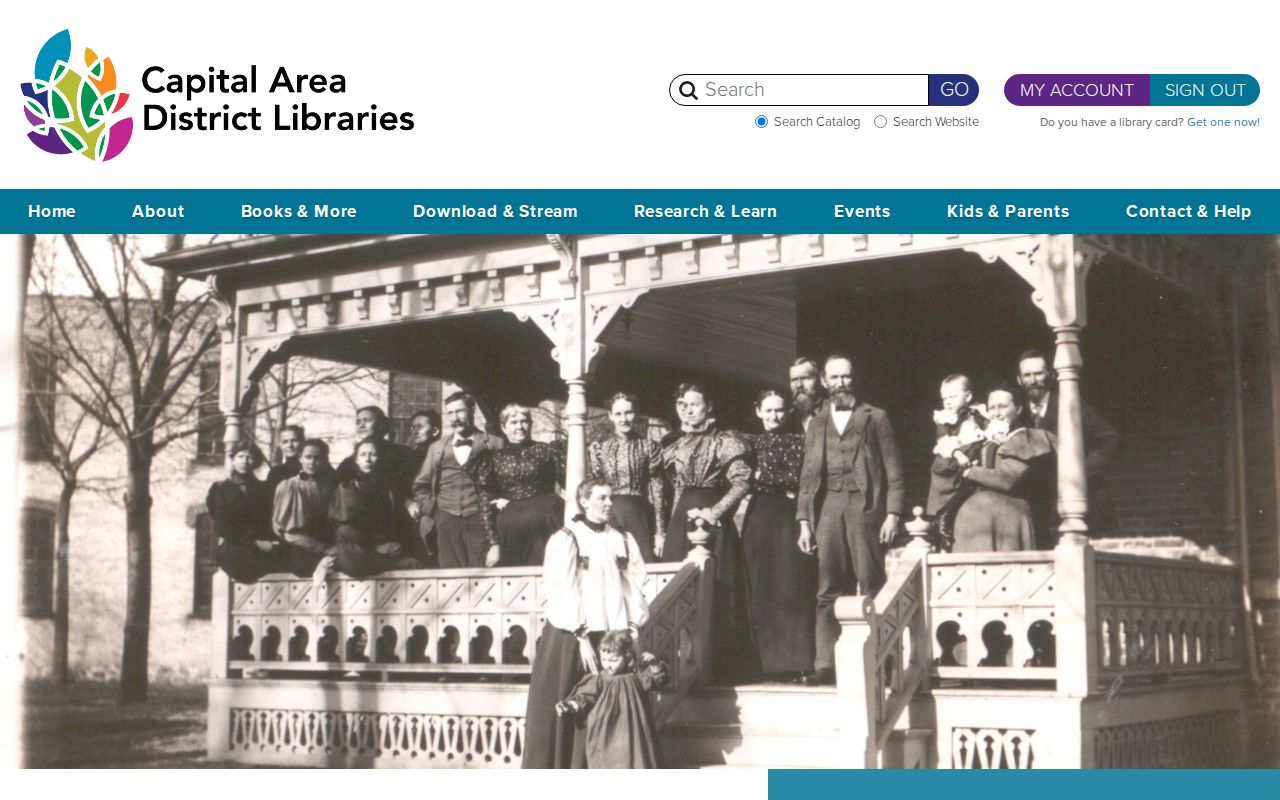
CADL's processed Directory Collection begins in 1909. Its other local files can help distinguish two people with the same surname when the directory alone gives only an initial.
Ingham City Directories by Address
City directories become much more useful once the search moves from a surname to an address. CADL describes yearly publications that provide owner or renter information by last name and, from 1906 forward, by street address. The catalog also names the Polk cross-reference directory for Lansing, MI, often called a reverse or criss-cross directory. Its address-first section can show the person or business listed at a number during that directory year. It does not prove ownership, current residence, or the legal parcel.
The CADL Local History Center provides the local collection route for checking a street section against the alphabetical section.
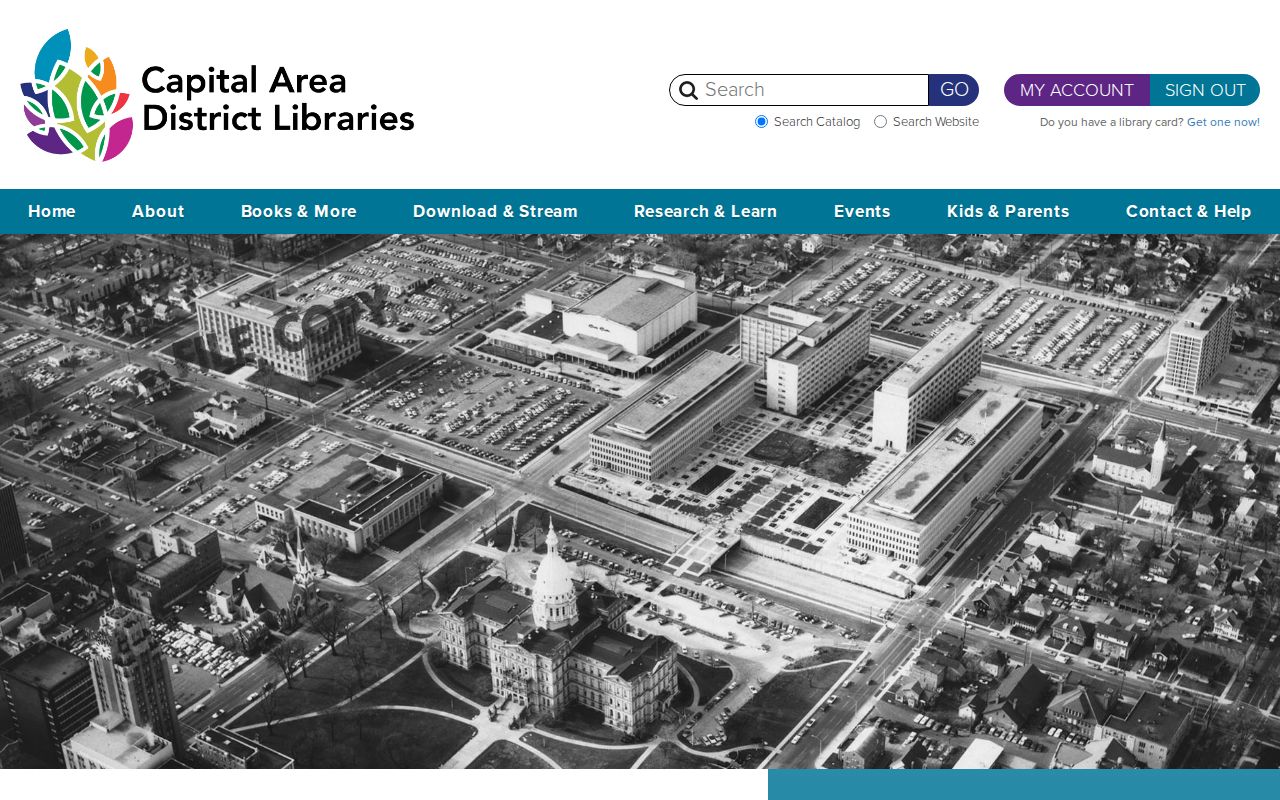
Start with the surname when it is known, then turn to the street portion. If the number changes, compare the old street name, nearby entries, and the early numbering system before treating the address as a different property.
- Criss-cross directory
- An address-first portion of a directory that lets a reader work from a street number toward listed occupants or businesses.
- Householder index
- An alphabetical listing of household heads or listed residents, commonly used to locate the first entry before checking the street section.
- Abbreviation key
- The publisher's own list of short labels for home, office, widow, boarder, rooms, and occupations. Read the key in the same volume.
Reading an Ingham City Directory Entry
A directory line is compact. The entry should be copied as printed before it is interpreted. A representative Lansing pattern is “Gunn, Lewis A (Mercy J), h 507 S Logan.” It gives an indexed name, a spouse in parentheses, the home marker, and an address. A later entry might keep the number but change the spouse or omit the spouse after a death. The scan, not memory, decides what a particular abbreviation means.
| Name | Surname followed by the given name or initial, usually in alphabetical order. |
|---|---|
| Household relation | A spouse may be in parentheses; “wid.” can flag a widow and explain a changed household listing. |
| Occupation or employer | Older volumes often show a trade, office, factory, or employer as a historical clue. |
| Residence | “h” or a home marker followed by number and street; an office or business address may be separate. |
| Owner or renter mark | Some later issues indicate a directory-era ownership or rental notation, not proof of title. |
| Street section | Address-first entries can show several occupants or a business at one number. |
Note: A directory's initials, punctuation, and symbols should be transcribed exactly because they may separate two similar Ingham households.
Ingham City Directory Branch Access
CADL offers more than a shelf of printed volumes. Lansing directories through 1960 are readable as full text through Ancestry Library Edition at a CADL branch, while its genealogy resources also point to MyHeritage Library Edition, Local History Online, and obituary-request help. Branch access is important because the full-text directory run is not described as an unrestricted home database. A page hit is a lead, and the page image still deserves a careful check.
The CADL genealogy databases page explains the branch-based research options and connects the directory search to census, newspaper, and obituary material.
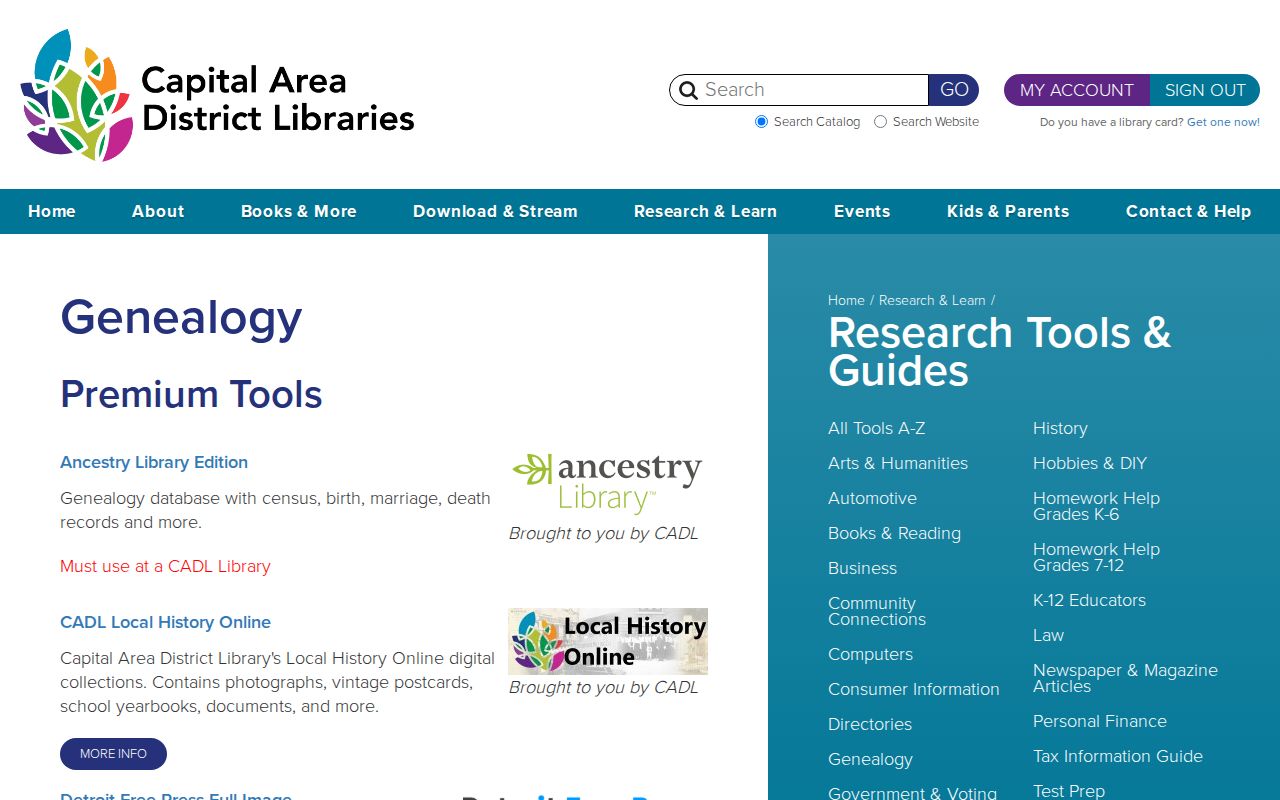
Use the branch result to capture the year, title, and page. Then compare it with the closest earlier and later volume rather than extending a single address across several years.
Ingham City Directories Are Not All Online
A digitized search is helpful, but it does not replace the local shelf. CADL has linked PDFs for six early volumes and provides branch full text through 1960, while its print run is described as continuing from 1867 to the present. MSU keeps a parallel set of Polk volumes in Special Collections and in the stacks. A missed online result can reflect a title variant, a gap, a combined issue, a library-use limitation, or a volume that has not been digitized.
Check the CADL catalog, branch access, and the MSU holdings before concluding that a household has no local directory entry. That extra check is especially useful for a surname that falls near a date gap or a move between Lansing, East Lansing, Holt, Haslett, and Okemos.
Ingham City Directory Companion Sources
Directories are strongest when paired with local collections that answer a different question. Downtown CADL holds the Lansing State Journal and predecessors on microfilm from 1855 to the present. CADL Local History Online includes selected digitized newspapers, Lansing State Republican death notices from 1855-1872, school collections, name-index cards, and oral histories. CADL reports nearly 1,000 local school yearbooks, which can place a former student in a particular school year without assuming a later address.
The Historical Society of Greater Lansing collections include schools, clubs, worship communities, government, business, military, and union history.
These collections are not a unified resident-name database. They provide a way to test an address, institution, school, or group that appears in a city directory.
Ingham City Directories, Maps, and Census
MSU identifies Lansing Sanborn maps from 1867-1970, a useful partner for a directory street address. The maps can show a building footprint, business use, or block change, while the directory identifies the listed people or firms for one year. Federal census schedules are released on a 72-year rule, so the public complete federal census currently ends with 1950. A directory is often the bridge between census dates, not a substitute for a census household.
Pair a 1906 entry with the 1900 and 1910 censuses, a 1938 entry with the 1930 and 1940 censuses, and a 1945 entry with the 1940 and 1950 censuses. Differences can be normal because a census date and a directory publication date capture different points in time.
Trace Ingham City Directory Households
Following a household works best as a short sequence of documented comparisons. Start with an exact name or address, preserve the details in the entry, and move one directory year in each direction. A person who vanishes may have moved, died, changed a surname, lived outside the publisher's coverage, or simply been omitted. An obituary, cemetery record, deed, or census page can sort those possibilities. When a historic entry needs a current official check, use an Ingham resident lookup rather than treating the directory as a present-day record.
- Find the first likely surname entry and record the exact year, title, page, address, household relation, and abbreviations.
- Check the directory immediately before and after it for a move, a changed spouse notation, or a different initial.
- Use the street or criss-cross section, when available, to compare other names at the address and nearby numbers.
- Pair the address with the nearest released federal census and the appropriate Michigan state census record for 1884 or 1894.
- Use an obituary, cemetery, deed, or probate record to test why the household disappeared from the local run.
Early Lansing requires an added check. The first numbering system was used about 1867-1883, and early directories may omit modern directional street qualifiers. Keep the printed street spelling and surrounding block notes with the research record.